

Home » PSLE Composition Writing
PSLE Composition Writing
Composition writing is one of the most important parts of PSLE English. To do well, students need more than good vocabulary or interesting ideas. They need to understand how to plan a story, build clear structure, develop scenes meaningfully, and write in a way that is accurate, engaging, and easy to follow.
This guide brings together the key skills, strategies, and next steps students need to become more confident and effective in PSLE composition writing.
What PSLE Composition Writing Is
PSLE composition writing tests whether students can write a clear, meaningful, and well-developed story based on a given topic or prompt. Students need to do more than simply describe events. They must build a composition that is organised, relevant, and easy for the reader to follow.
A strong composition usually includes:
- a clear story direction
- relevant and believable ideas
- logical paragraph development
- suitable vocabulary
- accurate grammar and sentence structure
- an ending that feels complete
Composition writing is not about forcing in difficult words or writing the most dramatic story possible. It is about communicating ideas clearly and effectively in a way that fits the task.
A strong understanding of composition writing helps students:
- organise ideas more clearly
- write more confidently
- express emotions and events more effectively
- improve overall Paper 1 performance
Why Students Find Composition Writing Difficult
Many students find composition writing difficult because it requires several skills at once. They must think of ideas, organise them, use suitable vocabulary, write accurately, and keep the story flowing naturally.
Students often struggle because they:
- do not know how to start
- have ideas but cannot develop them well
- write stories that are too rushed or too long-winded
- rely too much on memorised phrases
- use vocabulary in unnatural ways
- do not plan before writing
This is why composition writing can feel overwhelming. It is not just about creativity. It is also about structure, clarity, control, and practice.
What Makes a Strong PSLE Composition
A strong PSLE composition is not necessarily the most complicated one. It is usually the one that is best planned, clearly written, and meaningfully developed.
Strong compositions often have these qualities:
- Clear structure — the story has a beginning, middle, and end that connect smoothly
- Relevant ideas — the events and details fit the topic and help develop the story naturally
- Good paragraph development — each part of the story moves the reader forward and adds something important
- Controlled language — vocabulary and sentence structures are used accurately and naturally
- Meaningful description — thoughts, feelings, and actions are described in a way that helps the reader picture the scene
- A complete ending — the story closes properly and does not feel rushed or cut off
Students do better when they realise that a strong composition is usually built on clarity and control, not just fancy writing.
Key Skills Students Need for Composition Writing
Students usually improve faster in composition when they focus on specific writing skills instead of trying to write better in a vague way.
- planning before writing
- understanding the topic clearly
- building a simple but effective story structure
- developing ideas with enough detail
- using vocabulary naturally
- showing feelings and actions clearly
- writing smoother sentences and transitions
- ending the composition meaningfully
Students also benefit from learning how to avoid irrelevant details, stay on topic, balance action and description, and manage time during the paper.
How Students Should Approach Composition Writing
A clear method helps students write with more confidence and less panic. Instead of rushing into the composition, students should work through the task step by step so they can understand the topic, organise their ideas, and write a story that is clear, relevant, and well developed.
Students should first think about what the topic is really asking and what kind of story would suit it best. If they misunderstand the topic at the start, the whole composition may become less relevant or harder to develop.
Even a short plan helps students organise the story, decide on the key events, and avoid writing aimlessly. A simple structure often leads to a clearer and more focused composition.
Students should aim for a story that is manageable, believable, and easy to develop within the time limit. A simple story with good development is usually stronger than a complicated story that feels rushed or confusing.
Instead of rushing through many events, students should focus on making the important scenes clear and meaningful. This helps the composition feel more complete and engaging for the reader.
Before finalising the answer, students should read the new sentence again and ask themselves whether the grammar is correct, the meaning is still the same, and the sentence sounds natural. This final check often helps students catch mistakes that would otherwise cost marks.
Before finishing, students should review whether the story flows smoothly, stays on topic, and uses language accurately. This final check can help catch unclear sentences, awkward phrasing, and rushed endings.
This step-by-step approach often helps students write more focused and complete compositions with greater confidence.
Common Composition Mistakes
Students often lose marks in composition because of repeated writing habits that weaken the story.
- starting without planning
- writing stories that are too unrealistic
- using bombastic vocabulary incorrectly
- including too many events without enough development
- writing weak or rushed endings
- repeating the same sentence patterns
- drifting away from the topic
- describing too little or too much
Some students also rely too heavily on memorised model phrases. While these can sound impressive at first, they often feel unnatural if the student does not fully understand how to use them.
A stronger approach is to combine:
- good planning
- natural vocabulary use
- clear paragraph development
- accurate grammar
- meaningful storytelling
Key Areas Students Can Improve In
Composition writing becomes much easier when students break it down into smaller, more manageable skills.
- Story Planning — learn how to create a simple story outline before writing
- Introductions and Endings — learn how to start clearly and end meaningfully
- Show, Don’t Tell — describe actions, emotions, and scenes in a way that feels vivid but natural
- Vocabulary in Context — use vocabulary that fits the story instead of words that feel forced or memorised
- Paragraph and Sentence Flow — move from one part of the story to the next smoothly
- Relevance to the Topic — stay focused on what the question is actually asking
How To Improve in Composition Writing
Students usually improve most when composition practice becomes structured and purposeful.
- Read and analyse good examples
- Build story planning habits
- Focus on one writing skill at a time
- Review mistakes properly
- Practise consistently
- Strengthen grammar and sentence control
Regular writing practice with useful feedback is usually more effective than occasional last-minute writing.
How Composition Writing Supports PSLE English
Composition writing does not only help students in Paper 1. It also strengthens broader English skills.
When students improve in composition, they often become better at:
- organising ideas
- writing clearer sentences
- using vocabulary more naturally
- expressing thoughts with more confidence
- understanding what makes language effective
That is why composition writing is best viewed as a core communication skill, not just one exam component.
Next Steps and Support

Primary English Regular Classes
Build stronger composition writing skills through our Primary English regular classes, where students receive structured guidance in planning, development, vocabulary use, and Paper 1 writing strategies.

Composition Online Course
Build confidence step by step with guided lessons, model examples, and focused practice in planning, developing, and improving compositions.

Composition Workshop
Get targeted support in story structure, vocabulary use, idea development, and writing techniques to help students improve their compositions more effectively.
Related Composition Topics
Every student has different strengths and challenges in English. Some need to build stronger grammar foundations. Others need help with comprehension precision, writing development, or oral confidence. The most effective support is targeted, structured, and focused on the areas that matter most.
At Lil’ but Mighty, students can get support in grammar and language accuracy, comprehension answering skills, situational writing, composition development, oral communication, and revision strategy.
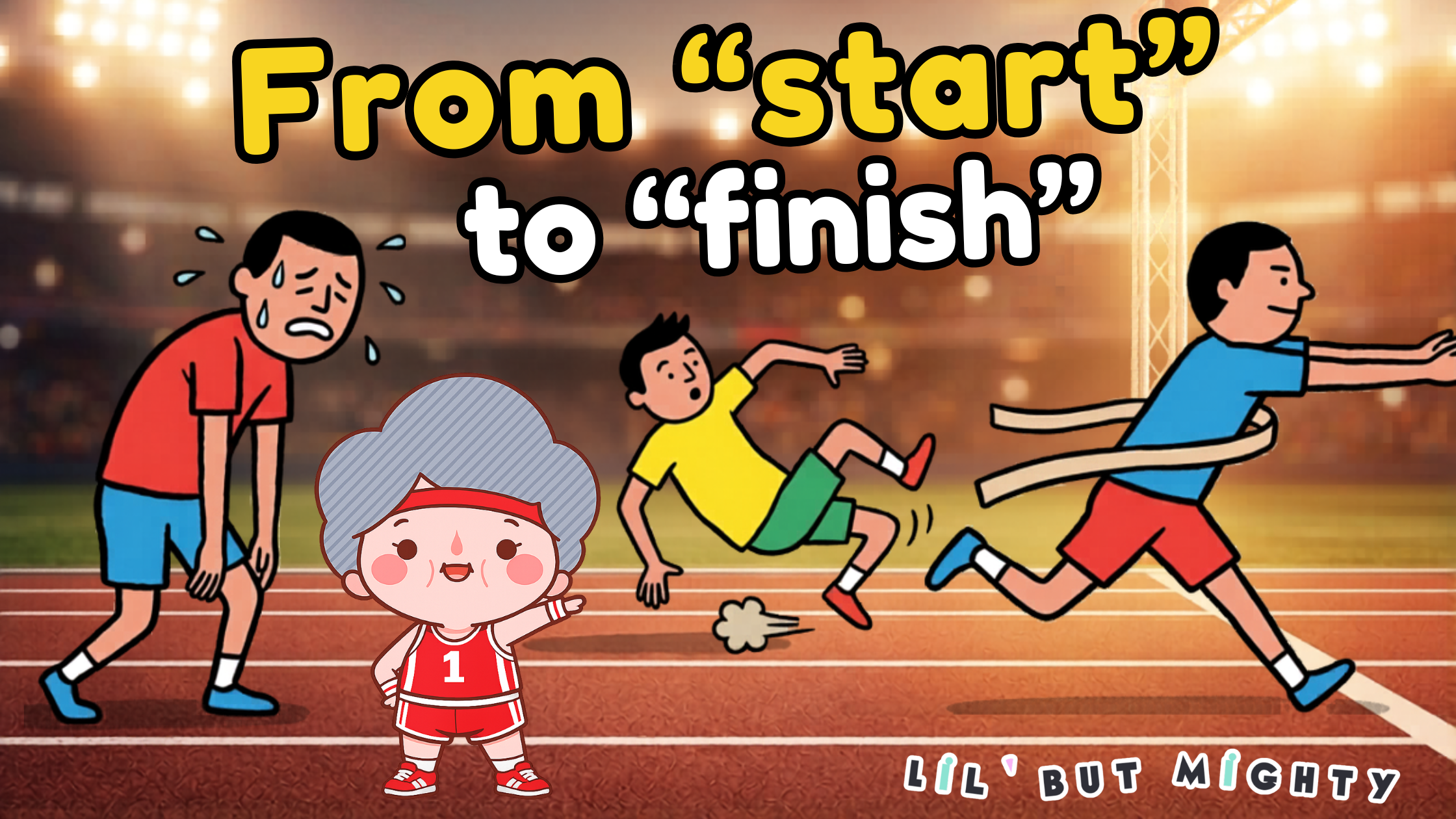
From “Start” to “Finish”: Essential Vocabulary and Phrases for Compositions on Running Races
- Creative Writing & Compo, MOE, Primary School English
- 14/04/2026
About the Face: A Descriptive Writing Series – The Eyes
- Creative Writing & Compo, Primary School English, Vocabulary
- 29/10/2025
O-Level Descriptive Essay (2026): “Sights and Sounds of a Journey”
- Creative Writing & Compo, O-levels, Secondary School English
- 18/10/2025
Flashback Introduction for Composition: 2 Simple Ways to Avoid Cliche and Impress Examiners!
- Creative Writing & Compo, Primary School English
- 10/10/2025
Composition Storylines To Avoid Writing
- Creative Writing & Compo, Primary School English, PSLE Format
- 30/09/2025
Acing Your Composition: 3 Takeaways From 2025 Prelim Examination
- Creative Writing & Compo, Free Downloads, Primary School English, PSLE Format
- 15/09/2025
Inspire your child to write: Learn from a 14-year-old’s award-winning story.
- Creative Writing & Compo, English in the real world
- 03/09/2025
The Language of Sports: Crafting Impactful Narratives Part 1
- Creative Writing & Compo, Primary School English
- 24/06/2025
How to Overcome Writer’s Block: 5 Tips and Tricks
- Creative Writing & Compo, O-levels, Primary School English, Secondary School English
- 28/05/2025
Improve Your Writing with ARMS: The Ultimate Editing Strategy
- Creative Writing & Compo
- 25/05/2025
Say Goodbye to Cliche Introductions in Composition Writing – Part 2
- Creative Writing & Compo, Primary School English
- 06/05/2025
Say Goodbye to Cliché Introductions in Composition Writing – Part 1
- Creative Writing & Compo, Primary School English
- 01/04/2025
Mastering Cooking & Baking Vocabulary: Boost Your Writing with Essential Kitchen Jargon
- Creative Writing & Compo, Oral, Primary School English, Vocabulary
- 29/10/2024
Top 2024 Prelim PSLE Composition Topics & Tips: Adjectives, Actions, and Idioms Unpacked
- Creative Writing & Compo, Free Downloads, Primary School English
- 24/09/2024
Mastering Expository Essays: Brainstorming with the MMEPS Framework for ‘O’ Level Success
- Creative Writing & Compo, Secondary School English
- 26/07/2024
Master Continuous Writing for the PSLE 2025: Key Changes and Top Tips
- Creative Writing & Compo, Primary School English
- 23/07/2024
5 Tips for Creating a Well-Loved Character in Our Writing
- Creative Writing & Compo, Secondary School English
- 04/06/2024
Expressing Character Feelings – Using A Variety of Show Not Tell!
- Creative Writing & Compo
- 21/05/2024
Up-Close and Personal: Getting to Know the Personal Recount Essay
- Creative Writing & Compo, Secondary School English
- 14/05/2024
Explaining Examples for Expository Essays (Secondary English)
- Creative Writing & Compo, Secondary School English
- 09/02/2024
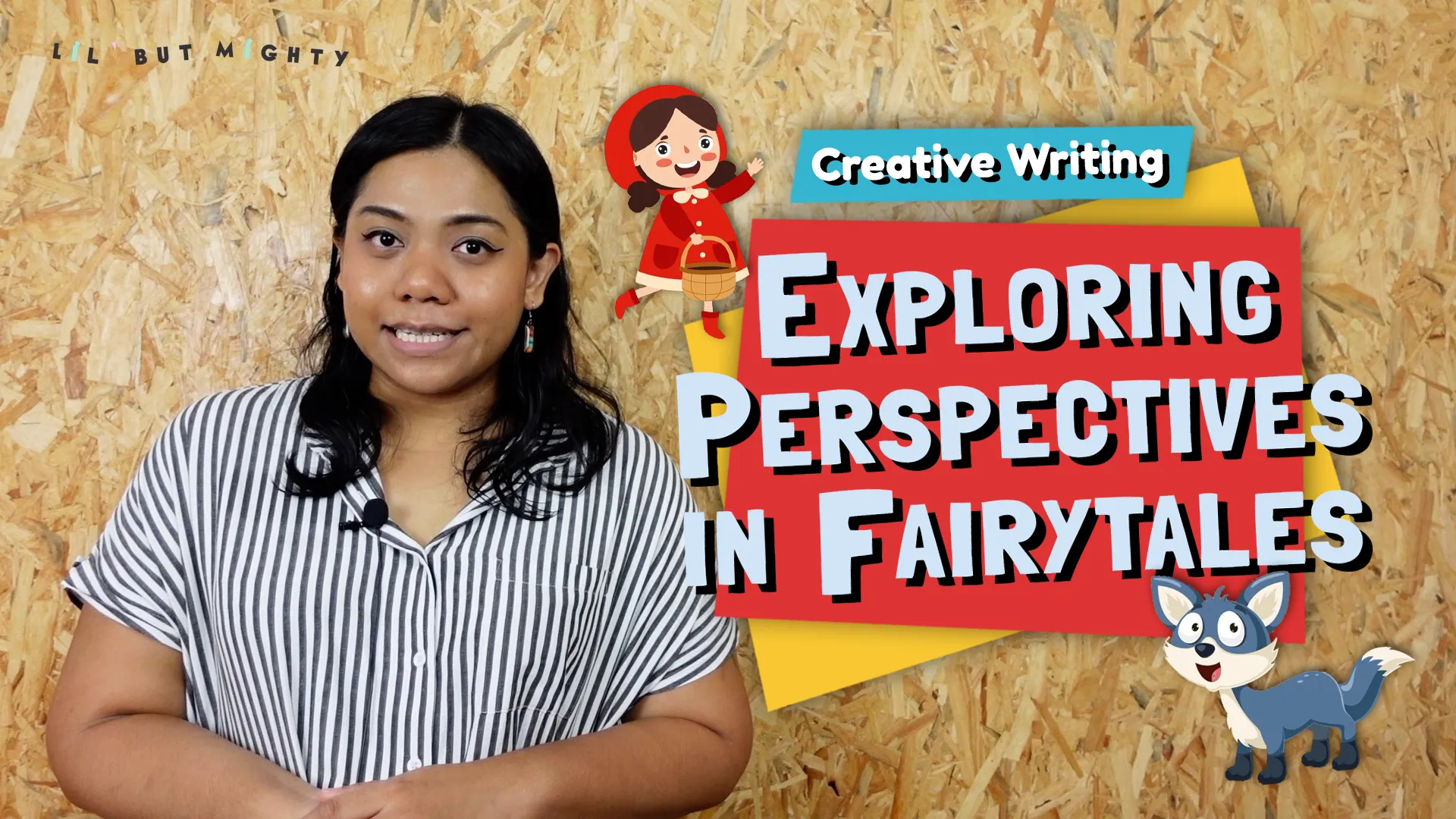
Exploring Perspectives in Fairytales
- Creative Writing & Compo, Secondary School English
- 07/11/2023
Writing Comes Alive! – Precise Nouns to Describe Occupations
- Creative Writing & Compo
- 03/10/2023
Using and Identifying Hyperboles
- Creative Writing & Compo, Secondary School English
- 12/09/2023
Past Year PSLE Composition Topics 2015–2024 + 3 Tips To Do Well!
- Creative Writing & Compo, Primary School English
- 05/09/2023
How Lil’ but Mighty Helps Students Improve in Composition Writing
Composition writing can feel frustrating when students have ideas but do not know how to develop them clearly. The right support helps students learn how to plan, write, and review more effectively so that composition becomes more manageable and less intimidating.
At Lil’ but Mighty, support in composition writing can help students strengthen:
- story planning
- paragraph development
- vocabulary in context
- sentence clarity
- descriptive writing
- Paper 1 confidence
Frequently Asked Questions About PSLE Composition Writing
Students are tested on whether they can write a clear, relevant, and well-developed composition using suitable ideas, structure, and language.
It is difficult because students need to generate ideas, organise them well, write accurately, and stay relevant to the topic at the same time.
Students improve by planning before writing, practising regularly, analysing good examples, and focusing on one writing skill at a time.
No. Vocabulary matters, but structure, relevance, idea development, and grammar are just as important.
Students usually benefit most from improving planning, story structure, and sentence clarity before trying to use more advanced vocabulary.
Help Your Child Improve in Composition Writing
Whether your child needs help with story planning, vocabulary use, idea development, or overall Paper 1 confidence, the right support can make composition writing clearer, more structured, and more effective.
Explore our full PSLE English guide for help with grammar, writing, oral, listening, and other key exam components.