Welcome to the first of a 3-part series that aims to help you craft an impactful narrative for sports-related compositions! I’m Mr Saha, a Specialist English Teacher at Lil’ but Mighty (Bukit Timah Branch) and I can’t wait to share my ideas with you.
When it comes to writing compositions with sports as its central topic or feature, language plays an essential role in capturing the intensity, excitement, and drama of athletic endeavours. Whether it’s a thrilling match, an individual’s personal journey, or a team’s collective effort, the way we describe sports can elevate the experience for the reader. But what kind of language should be used? Let’s break down the various elements that contribute to crafting an engaging piece of sports-related story.
1. Dynamic and Action-Packed Vocabulary
Sports are about movement, speed, and agility, so it makes sense that the language used in sports-related compositions should reflect this dynamism. Precise action verbs like charge, dive, soar and sprint evoke an immediate sense of motion, while adjectives such as explosive, relentless and unstoppable can amplify the impact of the action.
Consider the difference between:
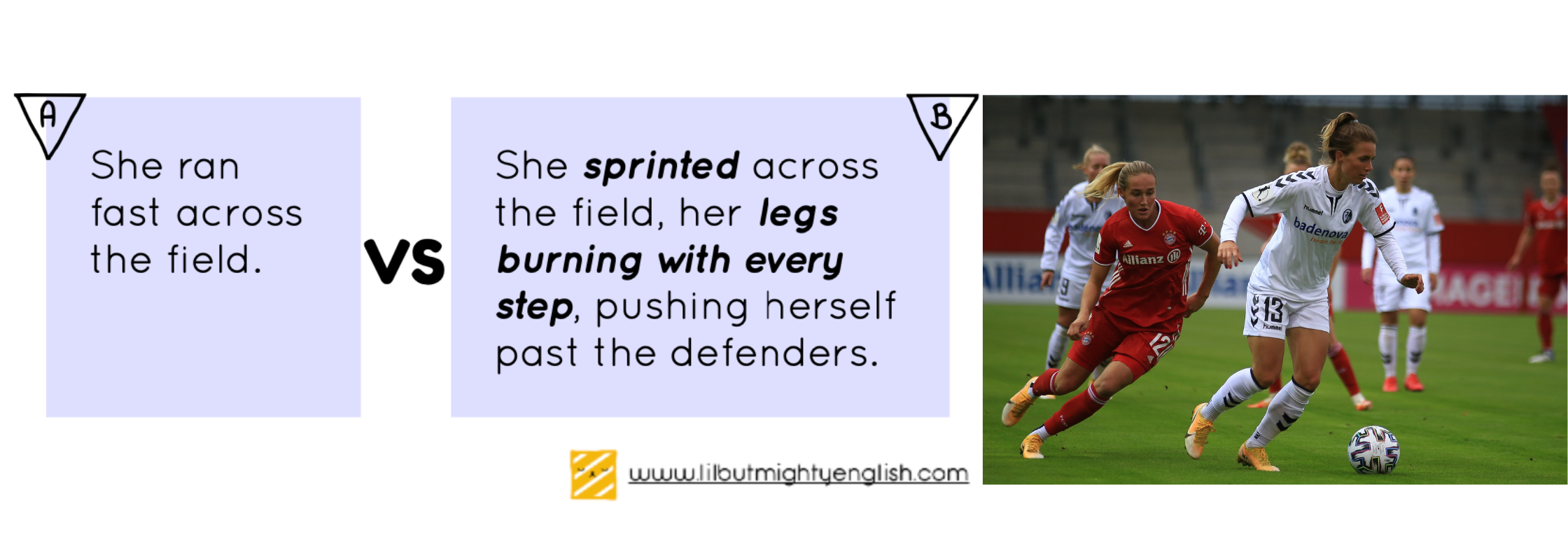
Example B uses more vivid verbs to paint a clearer picture of the athlete’s determination, giving readers a sense of the intensity of the moment.
2. Use of Metaphors and Similes
Sports-related narratives often employ metaphors and similes to add colour and drama to the story. These literary devices can convey the emotions and gravity of a situation in creative and memorable ways.

For example:
- The ball flew through the air like a missile aimed at the goal.
- He tackled the opponent as if he were a freight train barreling down a track.These comparisons help readers visualise the action in ways that go beyond the basic mechanics of the sport. Instead of merely telling the readers what is happening, you are showing them in a more dramatic fashion, making the action more real and memorable.
3. Vivid Descriptions of the Environment
Writing a story that revolves around sports is not just about the players; it is about the whole environment. The stadium or field, the weather, the crowd — all of these elements contribute to the atmosphere. Describing these settings using sensory details helps immerse the reader into the scene.
Imagine a football match being played under the lights:
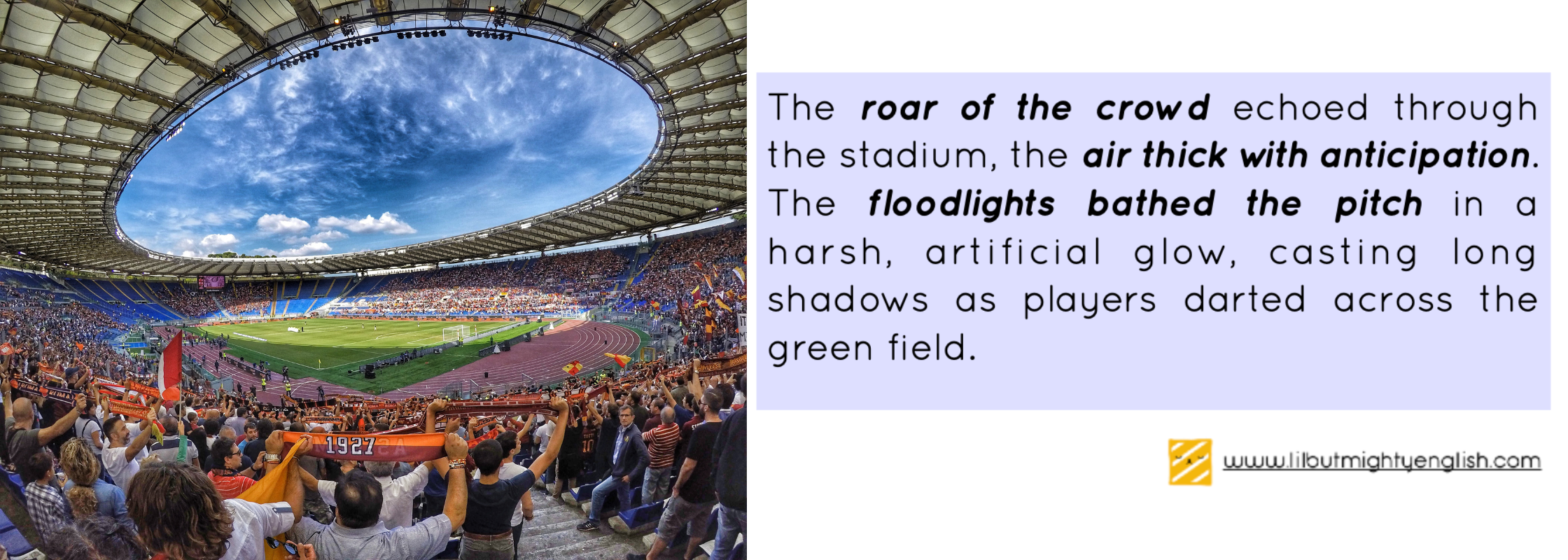
By capturing the surroundings, you give the reader a sense of what it feels like to be there, heightening the emotional connection to the game.
4. Jargon and Technical Terms
Sports often come with their own set of terminology, and knowing when and how to use them is important. For example, in a basketball composition, you might refer to a three-pointer or alley-oop. In football, you could describe a dribble or a corner kick. Being able to employ such sports-specific jargon showcases your ability to use precise and accurate terms in your writing as well as convey your ideas more clearly and effectively. This will definitely give that much needed boost to your Language score!
However, be mindful of your audience. Too much jargon can alienate readers who are not familiar with the sport, so balance is key. When introducing technical terms, make sure to provide enough context for the reader to understand without overwhelming them with details. Also, moderation is always key! Overusing technical terms in your writing may actually make your writing less clear as these terms may obscure the meaning that you are trying to get across.
—————–
Writing about sports is not just about the score or the stats; it is about telling a story. Whether it is the rush of an athlete sprinting across the finish line, the roar of the crowd, or the quiet tension before the final play, the language you choose brings the narrative to life. By using vivid action verbs, metaphors, emotional language, and incorporating the technical aspects of the sport, you can craft a compelling and immersive sports- related composition that resonates with your readers.
For more writing and other English tips, do check out the wide array of posts on the different components. Do keep a lookout for Parts 2 and 3 of the series where I will be focusing on using sports-related jargon in writing!
Find Mr Saha’s English tuition classes at: 170 Upper Bukit Timah Road, #B2-02 Bukit Timah Shopping Centre, Singapore 588179