

Home » PSLE English
PSLE English:
Complete Guide for Students and Parents
PSLE English can feel like a lot to manage. Students are expected to read carefully, write clearly, speak confidently, and use grammar accurately across different parts of the exam. This guide brings the full PSLE English paper together in one place so parents and students can understand the subject better and focus on the right next steps.
PSLE ENGLISH GUIDE OUTLINE
What Parents and Students Should Know About PSLE English
PSLE English is not just about memorising vocabulary or doing more worksheets. It tests how well a student can understand meaning, apply language accurately, and communicate clearly in writing and speech. Students do best when they build strong foundations step by step, from grammar and comprehension to writing, oral, and listening.
PSLE English Exam Format
PSLE English includes different components, and each one tests a different skill set. Knowing what each part requires helps students prepare more effectively.

Paper 1
Situational Writing (14 Marks) & Continuous Writing (36 Marks) Tests writing skills, including planning, structure, idea development, and language control.

Paper 2
Booklet A (MCQ - 25 Marks) & Booklet B (Open-ended - 65 Marks) Tests language use and comprehension, including grammar accuracy, vocabulary, and answering precision.

Oral
Reading Aloud (15 Marks) & Stimulus-based Conversation (25 Marks) Tests reading aloud and speaking confidence, including clarity, expression, and response quality.

Listening Comprehension
MCQ (40 Marks) Tests listening accuracy, focus, and the ability to catch important details quickly.
Key Areas Students Need to Master

Grammar
Build accuracy in sentence structure, tenses, editing, synthesis & transformation and more.

Comprehension
Learn how to identify evidence, answer precisely, and avoid lifting blindly.
Editing
Tests grammar awareness, spelling accuracy, careful reading, and the ability to spot and correct language errors in context.

Synthesis and Transformation
Tests manipulation of sentence structures and accuracy in transformation of words, while preserving both meaning and grammatical correctness in a rewritten sentence.

Situational Writing
Write with the right tone, purpose, and required content.

Composition
Develop ideas clearly and use vocabulary naturally in well-structured stories.
PSLE English Grammar
Grammar is one of the most important foundations in PSLE English. When students understand how sentences work, they are better able to answer accurately, write clearly, and avoid repeated mistakes across different parts of the paper.
Strong grammar supports not only Paper 2, but also comprehension accuracy, writing quality, and overall language confidence. Students often improve most when they strengthen core areas such as sentence structure, tenses, subject-verb agreement, connectors, and word choice before moving on to more specific question types.
A strong grammar foundation helps students:
- reduce careless mistakes
- improve sentence accuracy
- express ideas more clearly
- build confidence across the PSLE English paper

PSLE English Grammar Guide
Explore key grammar topics, common mistakes, and practical tips to build a stronger language foundation for PSLE English.

Grammar Online Course
Help your child strengthen grammar skills step by step with structured lessons, guided practice, and clear explanations.
Grammar Workshops
Get focused support in core grammar areas through guided practice and targeted strategies for PSLE English.
PSLE Comprehension
Comprehension is one of the areas where students often feel that they “know the answer” but still lose marks. This usually happens when answers are vague, incomplete, or not adhering to the question requirements.
Strong comprehension depends on learning how to read carefully, identify evidence, and respond in a precise way. Students also need to understand different question types and avoid copying blindly from the passage without processing the meaning.
Students improve when they learn how to:
- identify question requirements
- break down the question properly
- identify the right supporting details
- write concise but complete answers
- explain ideas in their own words where needed

PSLE Comprehension Guide
Learn how to answer more precisely and avoid common comprehension mistakes.

Visual Text Comprehension
Build stronger interpretation skills for posters, signs, diagrams, and other visual texts.
Comprehension Open-ended Workshops
Get targeted support in question analysis, answer precision, and comprehension strategies to help students tackle passages with greater confidence.
Comprehension Open-ended Online Course
Build confidence step by step with guided lessons, worked examples, and focused practice in reading carefully and answering comprehension questions more accurately.

PSLE English Editing
Editing tests how well students can identify and correct language mistakes in a short passage. To do well, students need more than grammar knowledge alone. They also need to read carefully, pay attention to the context, and understand how language rules work in context.
Students often lose marks in editing because they rush, are unable to focus on the right type of mistake, or change a word without checking whether the full sentence still makes sense. Strong editing skills come from building a solid language foundation and learning how to check spelling, tense, agreement, word form, punctuation, and sentence flow step by step.
A stronger approach to editing helps students:
- spot language mistakes more quickly
- correct errors with greater accuracy
- avoid overthinking simple questions
- build better language awareness for writing and Paper 2

PSLE Editing Guide
Learn how editing questions work, what common error types to look out for, and how to correct them more confidently.

Editing Online Course
Strengthen editing accuracy through guided lessons, clear explanations, and practice that helps students apply grammar rules in context.
Editing Workshop
Get focused support on common editing mistakes, question strategies, and the grammar rules students need to master.
PSLE Synthesis and Transformation
Synthesis and Transformation tests whether students can rewrite sentences accurately without changing the original meaning. To do well, students need to understand sentence structure, grammar rules, and how different words or phrases can be changed while keeping the idea the same.
Students often lose marks because they focused on structure and lost the original meaning in the transformation process. Others know the grammar rule, but struggle to apply it correctly when sentence structure changes. Strong performance in synthesis and transformation comes from recognising common patterns, understanding what the question is really testing, and checking carefully that the rewritten sentence is both grammatically correct and true to the original idea.
A stronger approach to synthesis and transformation helps students:
- recognise common question types more quickly
- rewrite sentences with greater accuracy
- preserve meaning while changing structure
- build stronger grammar awareness for Paper 2 and writing

PSLE Synthesis and Transformation Guide
Learn the common question types, grammar patterns, and key strategies students need to handle synthesis and transformation more confidently.
Synthesis and Transformation Online Course
Build accuracy step by step with guided lessons, worked examples, and focused practice on common PSLE question types.

Synthesis and Transformation Workshop
Get targeted support with sentence patterns, grammar rules, and practical strategies for tackling synthesis and transformation questions.
PSLE Cloze Passage
Cloze passage tests whether students can use vocabulary, grammar, and context clues to choose the most suitable word for each blank. To do well, students need more than a strong vocabulary bank. They must also read carefully, understand how ideas connect across the passage, and choose words that fit both the meaning and the sentence structure.
Students often lose marks in cloze passage because they choose a word that looks familiar but does not match the context, or they focus on one sentence without considering the flow of the full passage. Strong performance comes from reading for meaning, noticing grammar clues, and checking whether each answer sounds natural in context.
A stronger approach to cloze passage helps students:
- use context clues more effectively
- choose words with greater accuracy
- improve vocabulary application in real sentences
- build stronger reading and language awareness for Paper 2

PSLE Cloze Passage Guide
Learn how cloze passage questions work, what clues to look out for, and how to choose the most suitable answer with confidence.
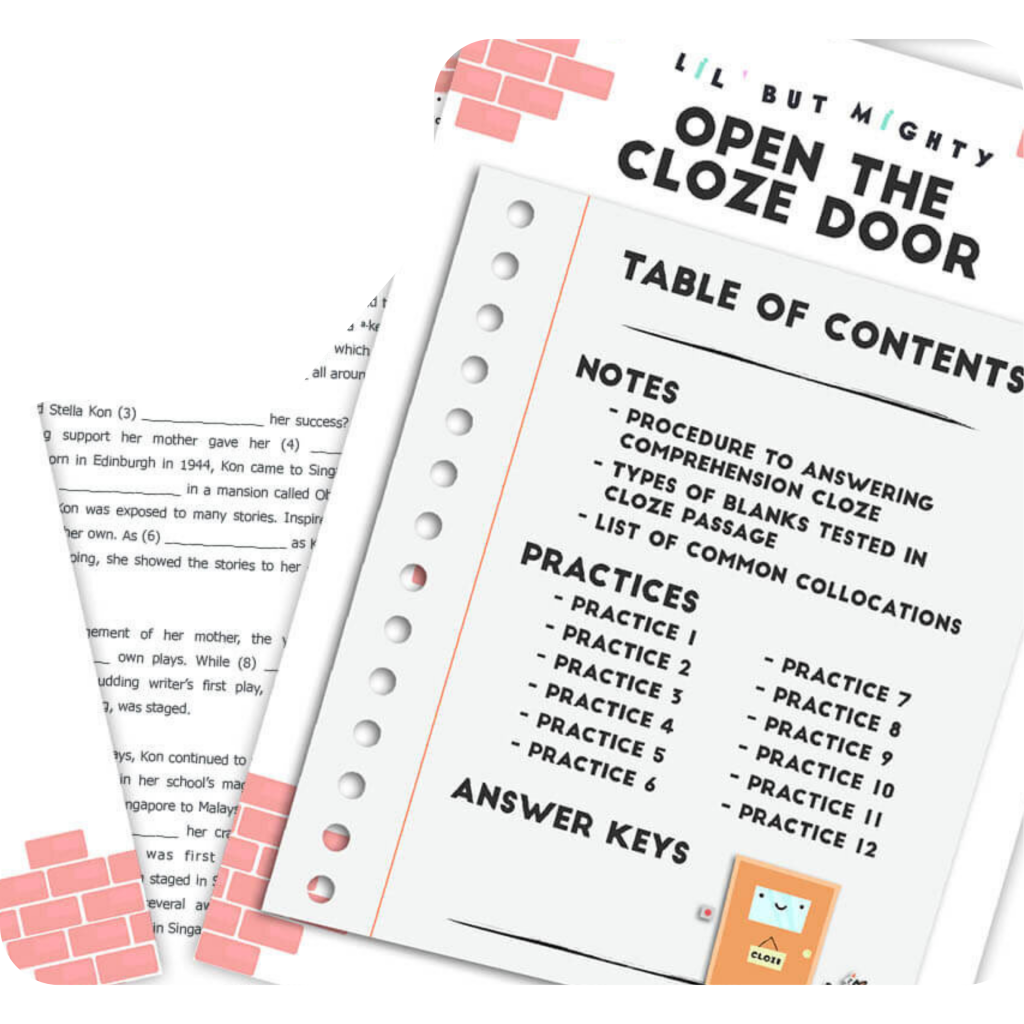
Cloze Passage Online Course
Strengthen vocabulary, grammar, and context-reading skills through guided practice and step-by-step explanation.
Cloze Passage Workshop
Get focused support in identifying common traps, using context clues, and improving accuracy in cloze passage questions.
PSLE Situational Writing
Situational writing tests whether students can respond appropriately to a given context and text type. To do well, students need to identify the purpose, audience, tone, and required points before they start writing. A strong response is clear, relevant, and well organised with the correct format.

PSLE Situational Writing Guide
Learn how situational writing questions work, what makes a strong response, and how to write with clearer structure, complete content points, and a tone that fits the task.

Situational Writing Online Course
Build confidence step by step with guided lessons, model examples, and focused practice in planning and writing stronger situational responses.

Situational Writing Workshop
Get targeted support in tone, format, content points, and writing strategies to help students handle situational writing more accurately and confidently.
PSLE Composition Writing
Composition writing gives students the chance to show creativity, language ability, and writing control. Good composition writing is not about forcing difficult vocabulary into every paragraph. It is about telling a clear, engaging story with suitable details and strong organisation. During an examination, being able to develop and present a well-organised story which fits the question requirements is key to success.
Students often improve most when they learn how to plan before they write, develop ideas in a focused way, and end their stories meaningfully.

PSLE Composition Guide
Learn how situational writing questions work, what examiners look for, and how to write clear, relevant responses with the right tone, purpose, and required points.

Composition Online Course
Build confidence step by step with guided lessons, model examples, and focused practice in planning, developing, and improving PSLE compositions.
Composition Workshop
Get targeted support in story structure, idea development, vocabulary use, and writing techniques to help students write more confidently and effectively.
PSLE Oral
PSLE Oral tests both reading aloud and stimulus-based conversation. Students need to show that they can communicate clearly and speak with confidence. For reading aloud, they should focus on pronunciation, pacing, phrasing, and expression appropriate to the context shown in the preamble. For stimulus-based conversation, they need to answer directly, explain ideas, and support them with personal experiences to shine.

PSLE Oral Guide
Learn how PSLE Oral works, what examiners look for, and how to improve reading aloud, response quality, and confidence in stimulus-based conversation.

Oral Online Course
Build confidence step by step with guided lessons, worked examples, and focused practice in reading aloud and responding more clearly and confidently.

Oral Workshop
Get targeted support in pronunciation, expression, idea development, and oral response strategies to help students perform more confidently in PSLE Oral.
PSLE Listening Comprehension
Listening Comprehension rewards calm focus and careful attention to detail in the spoken texts. Students often lose marks not because they do not know the language, but because they miss important words or lose concentration after one difficult question. Students can improve by learning how to read questions beforehand, identify likely keywords, and stay calm throughout the paper.

PSLE Listening Comprehension Guide
Learn how listening comprehension questions work, what skills students need, and how to improve focus, keyword recognition, and answer accuracy.
Listening Comprehension Online Course
Build confidence step by step with guided lessons, listening practice, and focused strategies to help students process information more accurately and calmly.
How To Improve in PSLE English
- Strengthen grammar foundations
- Practise by component
- Review mistakes carefully
- Build vocabulary through reading and writing
- Develop confidence through consistent practice
Many students improve more quickly when they stop doing everything at once and focus on the right areas in the right order.
Revision Tips for Students and Parents
For Students
- revise regularly instead of only before exams
- focus on weak areas, not just familiar sections
- keep track of repeated mistakes
- read questions carefully before answering
- reflect on why model answers work
For Parents
- identify which paper component needs the most support
- build a steady practice routine at home
- encourage effort and confidence, not just marks
- help children review mistakes calmly
- seek support when progress has plateaued
PSLE English Resources

Grammar Resources
Strengthen grammar accuracy, editing, and sentence control.
Compre Resources
Improve open-ended answers, inference skills, and reading precision.

Writing Resources
Get support for situational writing, composition planning, and vocabulary.

Oral Resources
Build confidence with oral guides, vocabulary support, and practice tips.

Exam Prep Resources
Find revision tips, parent resources, and practical exam guidance.

Composition Marking Services
Engage our composition marking service for clear, targeted feedback that helps your child improve structure, language, and idea development.
How Lil’ but Mighty Helps Students Improve
Every student has different strengths and challenges in English. Some need to build stronger grammar foundations. Others need help with comprehension precision, writing development, or oral confidence. The most effective support is targeted, structured, and focused on the areas that matter most.
At Lil’ but Mighty, students can get support in grammar and language accuracy, comprehension answering skills, situational writing, composition development, oral communication, and revision strategy.
Frequently Asked Questions About PSLE English
PSLE English tests writing, language use, comprehension, speaking, and listening. Students need both language accuracy and communication skills.
Students improve best when they identify weak areas clearly, build grammar foundations, practise by component, and review mistakes carefully.
Students should practise reading aloud with expression and build the habit of answering oral questions with reasons and examples.
Parents can help by supporting a consistent routine, encouraging careful review, and focusing on the student’s actual weak areas rather than only looking at marks.
This varies from child to child, but common areas of difficulty include comprehension precision, grammar accuracy, and oral confidence.
Help Your Child Build Confidence in PSLE English
Whether your child needs help with grammar, comprehension, composition, oral, or overall exam preparation, the right support can make practice more focused, effective, and encouraging.