You’ve set the timetable.
You’ve bought the practice books.
You’ve said, “This is for your own good!” more times than you can count.
But somehow… your child still isn’t motivated to study. Instead, you’re met with sighs, stalling, or blank stares.
Sound familiar?
You’re not alone—and you’re not doing anything wrong. But what if some of the things we say with the best intentions are actually making it harder for our children to stay motivated to study?
Let’s take a closer look.
😕 Common Phrases That Demotivate (Even If They Sound Helpful)
💬 1. “You need to do well, or you’ll fall behind.”
❌ Why it backfires:
At first glance, this might sound like a reasonable nudge. After all, parents don’t want their children to struggle or lag behind their peers. But when children hear this phrase, they often interpret it as a warning that they’re not good enough yet—or worse, that they’re already failing.
This kind of messaging taps into fear-based motivation, which might push a child to take action temporarily. They may rush through their homework, panic before an exam, or become extra anxious about every mistake. But over time, fear loses its power and leaves damaging effects in its wake. It can:
-
Lead to anxiety, where children fear academic tasks instead of embracing them
-
Trigger perfectionism, where they feel they must always be right or they’ve failed
-
Cause avoidance, where they give up or shut down rather than risk falling short again
In the long run, this approach chips away at confidence and diminishes the child’s intrinsic desire to learn. The goal becomes avoiding failure rather than achieving growth.
✅ Try instead:
🟢 “Let’s focus on what you can improve this week—I’ll support you along the way.”
This alternative communicates three powerful things:
-
Specificity – It zooms in on short-term goals rather than vague expectations.
-
Progress over perfection – It shifts the focus from comparison to personal growth.
-
Support – It reassures your child that they’re not facing challenges alone.
By taking a team-based, improvement-focused approach, you turn a potentially stressful conversation into one that builds confidence and motivation. Your child feels capable, seen, and understood—not judged. And when they believe you’re with them every step of the way, they’re much more likely to keep showing up, trying again, and pushing through.
Because real motivation doesn’t grow from fear—it grows from belonging, belief, and a sense of shared purpose.
💬 2. “Study hard so you can get a good job one day.”
❌ Why it backfires:
This phrase is one of the most common messages children hear from adults—and it’s one of the least effective. While it’s rooted in a desire to secure a child’s future, it fails to connect with how children and pre-teens experience time and meaning.
To a 10- or 12-year-old, “one day” feels like a vague, blurry dot on the horizon. The concept of job security, paying bills, or affording rent holds zero emotional relevance to them. Their world revolves around what’s immediate—today’s schoolwork, tomorrow’s spelling test, this weekend’s birthday party.
So when we anchor the value of learning to something far in the future, children mentally disconnect. The message doesn’t feel urgent, exciting, or personal. It turns studying into a chore to delay an imaginary problem rather than a meaningful pursuit for the present.
Even worse, it reduces education to a transaction: “Work now so you can earn money later.”
But the truth is, children don’t wake up motivated by financial stability. They’re energised by curiosity, creativity, exploration, and a desire to feel accomplished right now.
✅ Try instead:
🟢 “Let’s find something which you will enjoy learning about today.”
This reframe does two important things:
-
It anchors learning in the present, not a distant future.
-
It invites discovery, not obligation.
By shifting the focus to what’s interesting today, you help your child connect learning to enjoyment, not just responsibility. Maybe they’re curious about how planes fly, how volcanoes erupt, or how their favourite book author creates characters. When they’re allowed to explore, wonder, and ask questions, learning becomes alive—not just a means to an end.
And here’s the bonus: when children fall in love with learning now, they naturally build the habits, knowledge, and mindset that set them up for future success—without ever needing to hear, “You need this for your job someday.”
When children find meaning in the present, they are far more likely to carry that motivation into the future.
💬 3. “Other kids are doing better—you need to catch up.”
❌ Why it backfires:
In the heat of frustration or worry, it is easy to say this. Parents often intend it as a wake-up call—hoping it’ll spark urgency or effort. However, for most children, hearing that they’re behind others doesn’t light a fire. It dims their spirit.
Comparison, especially during formative years, can be deeply discouraging. When children are told that others are “doing better,” it sends the message that they’re already losing a race they didn’t even know they were in. Instead of feeling motivated to study, they may begin to feel:
-
Ashamed, because they’re not measuring up
-
Defeated, because no matter what they try, someone else seems ahead
-
Disconnected, because their parent sounds more like a critic than a coach
Even more concerning, repeated comparisons can slowly erode your relationship with your child. They may start to view you as someone they have to please—or worse, avoid—because they fear constant judgment.
While a little healthy competition can sometimes inspire action, this kind of personal comparison can possibly lead to self-doubt and resentment. Children lose sight of their own progress and begin to define success only by how they stack up against others.
✅ Try instead:
🟢 “Let’s look at how far you’ve come from last week. That progress is worth celebrating.”
This shift in focus is powerful. It moves the goalpost from being better than others to being better than yesterday. The child sees how they can continue to grow and be better than who they were yesterday. That’s a race your child can actually win—because it’s rooted in personal growth, not external pressure.
Celebrating small wins helps build:
-
Confidence, as your child sees how their effort leads to improvement
-
Ownership, as they begin to monitor and care about their own development
-
Resilience, as they understand that progress takes time and setbacks are part of the journey
This approach tells your child:
“You’re not competing against anyone else. You’re growing at your own pace, and I’m proud of you for that.”
When a child feels seen, supported, and safe to improve, they don’t just learn better—they love learning more.
💡 What Really Motivates Children to Learn?
Now that we know what not to say, here are three things that actually boost motivation in meaningful and lasting ways.
✅ 1. Connection Before Correction

Before children can care about what they are learning, they need to know they are cared for as who they are.
We often rush to fix what seems wrong—low grades, unfinished homework, messy handwriting—without first taking time to connect but motivation does not begin with correction. It begins with relationship.
Children thrive when they feel emotionally safe. When they know that their worth is not tied to performance, that they can make mistakes without shame, and that their parent is on their side, something powerful happens: they become more open to feedback, more willing to try, and more motivated to study—even in areas where they are struggling.
Think of connection as the soil. Without it, even the best strategies and resources will not take root.
🌱 What to try:
1. Protect 10 minutes of “no-agenda” time each day.
This could be during a car ride, bedtime, or over dinner. The only goal? To simply be together.
Talk about silly things, share a memory, listen to your child’s random thoughts—even if they are about a video game or what their classmate did during recess. These everyday moments are building blocks of trust.
2. Ask open-ended, low-pressure questions like:
-
“What was something fun or funny that happened today?”
-
“If you could design your own school subject, what would it be?”
-
“What made you smile today?”
These types of questions help children open up without feeling interrogated or judged.
When your child feels emotionally connected, they are less likely to view academic expectations as pressure—they see them as opportunities to grow, and to rise.
At the heart of it, children do not just want to succeed—they want to succeed with someone beside them. That “someone” is you.
✅ 2. Make Learning Tangible and Relevant
Children are naturally curious—they ask endless questions, explore their surroundings with wonder, and learn best when they see how something fits into the world around them. However, somewhere along the way, learning often gets boxed into worksheets, textbooks, and exams. When learning feels like disconnected tasks with no clear purpose, motivation starts to fade.
For many children, the question is not “Can I do this?”—it’s “Why should I care?”
If a child can’t see the point of what they’re learning, it starts to feel like busywork. That’s why making learning tangible and relevant is so important—it helps children connect the dots between what they are studying and the world they live in.
🔍 What to try:
1. Connect school topics to their interests.
Learning becomes instantly more meaningful when it intersects with your child’s passions.
-
Love football? Talk about how mathematics is used to calculate scoring averages, player stats, or even the angles involved in kicking a ball into the net.
-
Budding artist or comic book fan? Use character creation or storytelling to explore descriptive language, emotions, or grammar rules.
-
Aspiring chef? Let them plan a meal, scale a recipe, or convert measurements—great opportunities for applied mathematics and procedural writing.
When children see how knowledge shows up in everyday life, they stop asking, “What’s the point?”—because the point is right in front of them.
2. Turn theory into action.
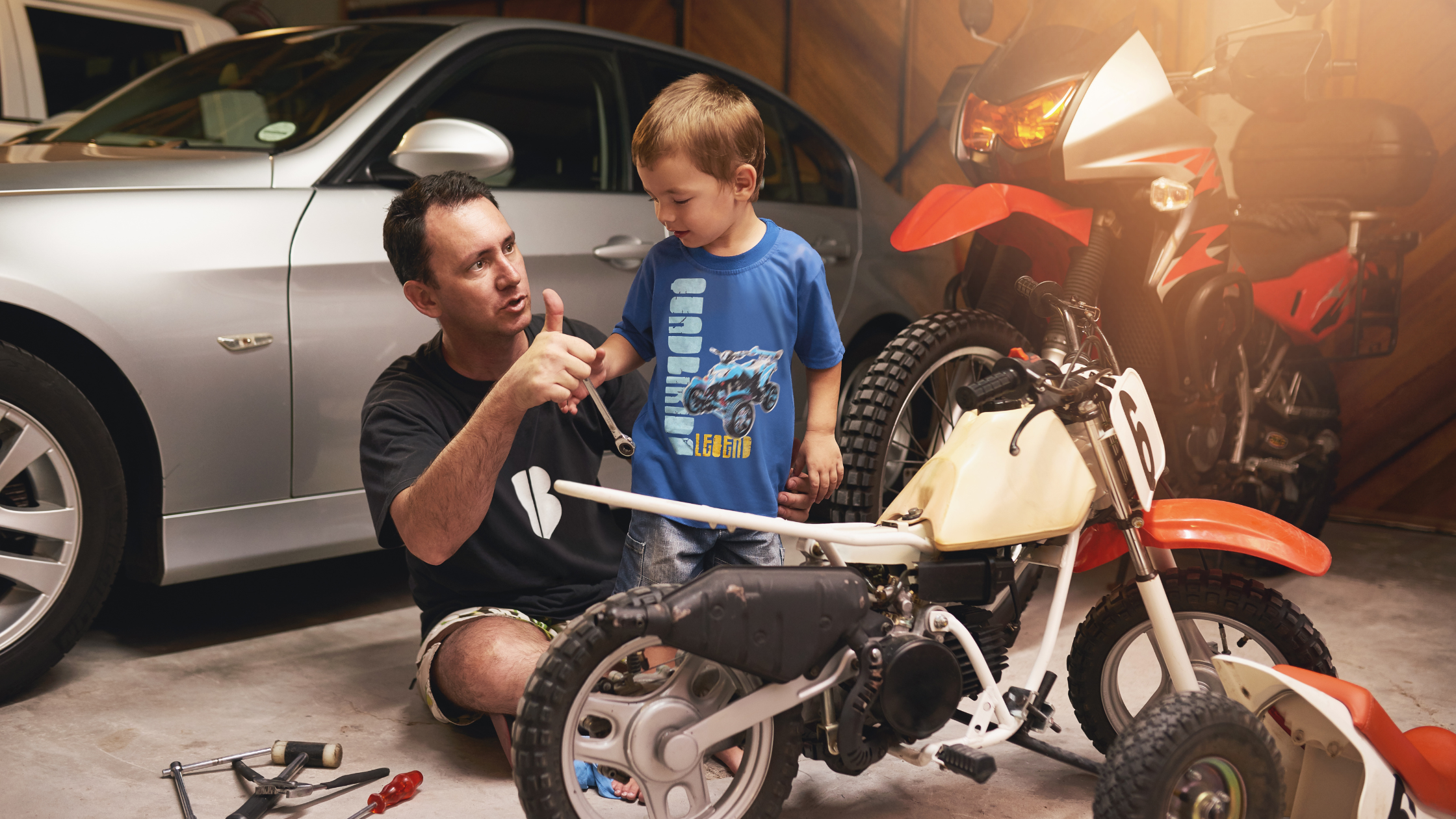
Whenever possible, move from paper to practice:
-
Doing a science topic on plants? Let them grow their own.
-
Learning about money in mathematics? Create a pretend store or involve them in real-life budgeting.
-
Studying persuasive writing? Ask them to write a letter convincing the family to have their favourite dinner or outing.
The goal is to make abstract concepts concrete, so learning becomes something they experience, not just something they memorise.
3. Reflect on why it matters.
After a task or activity, ask:
-
“Where else might we use this skill?”
-
“How could this help you in real life?”
-
“Which was more helpful in learning the concept? Is it the activity or the worksheet?”
Helping your child make these connections builds not just understanding—but motivation. They begin to see themselves as capable and informed contributors to their own world.
When learning feels real, children are no longer just students completing tasks—they are explorers discovering how the world works. At that point, studying is no longer a chore. It becomes an adventure.
✅ 3. Give Your Child A Voice and Choice
One of the biggest motivation-killers in children is the feeling that they have no control over what, when, or how they learn. When every part of their day feels dictated—“Do your homework now,” “Revise this first,” “You need to finish this by 5pm”—it is no surprise that children start to resist or disengage.
Children, just like adults, are wired to crave autonomy. They want to feel that their opinions matter, their decisions count, and that they have a say in shaping their day.
And here is the good news: You do not need to give up structure or lower expectations. Just giving them a little say in the learning process can dramatically increase motivation, cooperation, and even enjoyment.
🎯 What to try:
1. Let them decide the order or timing of tasks.
You are still guiding the schedule, but offering options helps them feel ownership. For example:
-
“Would you like to start with maths or science today?”
-
“Would you rather revise in the morning or after your snack?”
-
“Do you want to break this into two smaller sessions or finish it in one go?”
Even simple decisions like these help your child feel more in charge of their learning, not just subjected to it.

2. Ask them to set their own short-term learning goals.
Goal-setting builds purpose. Instead of only working toward parent- or teacher-imposed outcomes, let your child decide:
-
“What would feel like a win for you this week?”
-
“What is one thing you would like to be better at by Friday?”
-
“What do you want to show your teacher (or me) by the end of today?”
Children who set their own goals—no matter how small—are more motivated to study. Why? Because it came from them.
3. Offer meaningful choices where possible.
It could be:
-
Picking a book they would like to read for English
-
Choosing how to present what they have learnt (e.g. slideshow, poster, short video)
-
Selecting a reward for reaching a goal (e.g. 30 minutes of playtime, choosing a game for family night)
Choice reinforces that their voice matters and builds decision-making skills in the process.
When children feel like active participants in their learning journey, something shifts. They are not just checking off tasks—they are owning them and when they own their learning, motivation does not have to be forced—it comes from within.
❤️ A Gentle Reminder for Parents

You’re doing your best. Wanting your child to succeed comes from a place of deep love.
But remember—your words carry weight. When spoken with empathy, encouragement, and curiosity, they can do more than instruct… they can inspire.
The goal is not just to raise a child who studies hard.
It is to raise a child who learns with purpose, confidence, and joy.
Let’s try and start with what we say—and how we say it.
The above may seem like quite a change but take the step to begin somewhere. Even by taking one small step, it is a step forward.
If you enjoyed reading this article, we welcome you to explore how else learning English can be purposeful and engaging for your child. You can find us at 1 Marine Parade, #04-05 Parkway Centre, Singapore 449408.