Dear Primary 6 students (and parents!), I’m Ms Nandy, and I’m back with another blog post for you! For those of you who newly promoted to Secondary 1, congratulations are in order! You’ve worked hard, grown so much, and are now standing on the edge of a brand-new adventure: Secondary School. I was having a conversation in class with some of my Primary Six students, and I realised many of them (and you) are not aware of how the English curriculum changes. The jump from Primary 6 to Secondary 1 English may seem big, but don’t worry—we’re here to walk you through it. Let’s explore what will change, what will stay the same and how you can prepare for Secondary School English.
1. Say Goodbye to Multiple-Choice Questions (MCQs)
That’s right—MCQs are no longer part of the English exams in secondary school! Instead of picking an answer from four options, you’ll now have to:
• Write full sentence answers
• Explain and support your responses with evidence
• Think about how and why, not just what
This change encourages deeper understanding and better expression. While it may seem challenging at first, it also gives you more freedom to think and respond in your own words.
2. Comprehension Gets Deeper: Two Passages and Summary Writing
In primary school, comprehension usually involved one passage followed by short-answer and vocabulary questions. In secondary school, things change quite a bit. You’ll be given two comprehension passages instead of one – one narrative (story-based) and one non-narrative (factual). These passages are often longer and more complex, with higher-level vocabulary and themes. You’ll be expected to make inferences, analyse language, and evaluate what the writer is trying to say.
That’s not all—summary writing is a part of the non-narrative comprehension paper too and is worth 15 marks. You’ll need to identify key points from a few paragraphs of the given passage, paraphrase them in your own words and write a concise summary within a specific word limit (80 words)
This section tests not just your understanding, but also your ability to write clearly, accurately and precisely.
3. Writing Expands Beyond Stories (And No More Pictures!)
In primary school, composition writing often started with three pictures, and you built your story around them. In secondary school?
No more pictures.
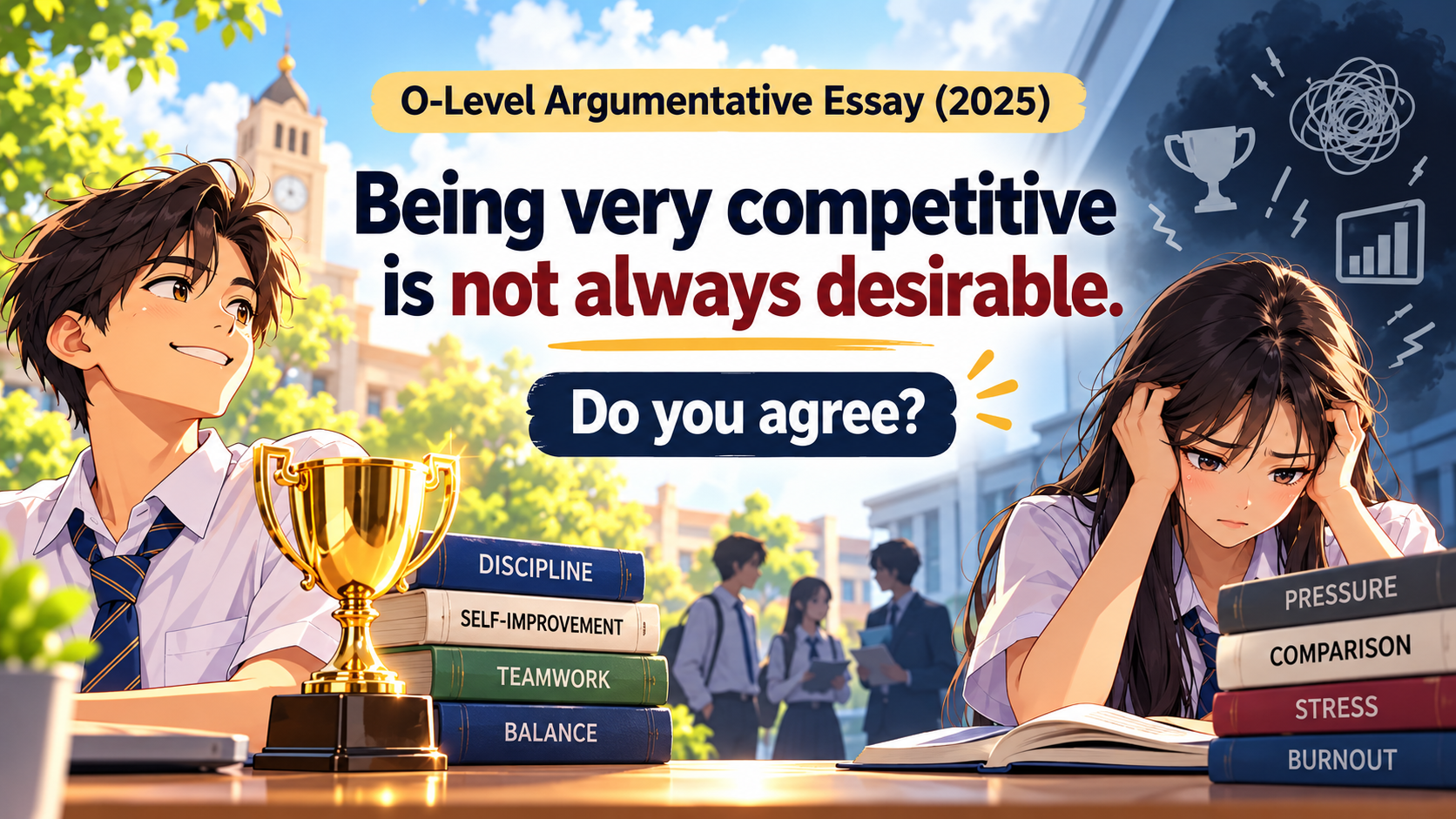
You’ll be given a single essay question—sometimes a short prompt or theme—and it’s up to you to plan, structure, and write with purpose and clarity. Similar to primary school, secondary English writing is also divided into two parts: Continuous Writing and Situational Writing. For Continuous Writing, you will be able to choose from a selection of essay questions such as:
• Narrative (story-based)
• Descriptive (painting a scene with words)
• Personal recount (based on real-life experiences)
• Expository (explaining an idea)
• Argumentative (stating and supporting your opinion)
Your essay should be well-developed with a clear start and end. It’s not just about what happens— it’s about why it matters, and how well you communicate that to your reader.
– Situational Writing: Real-Life Writing Skills
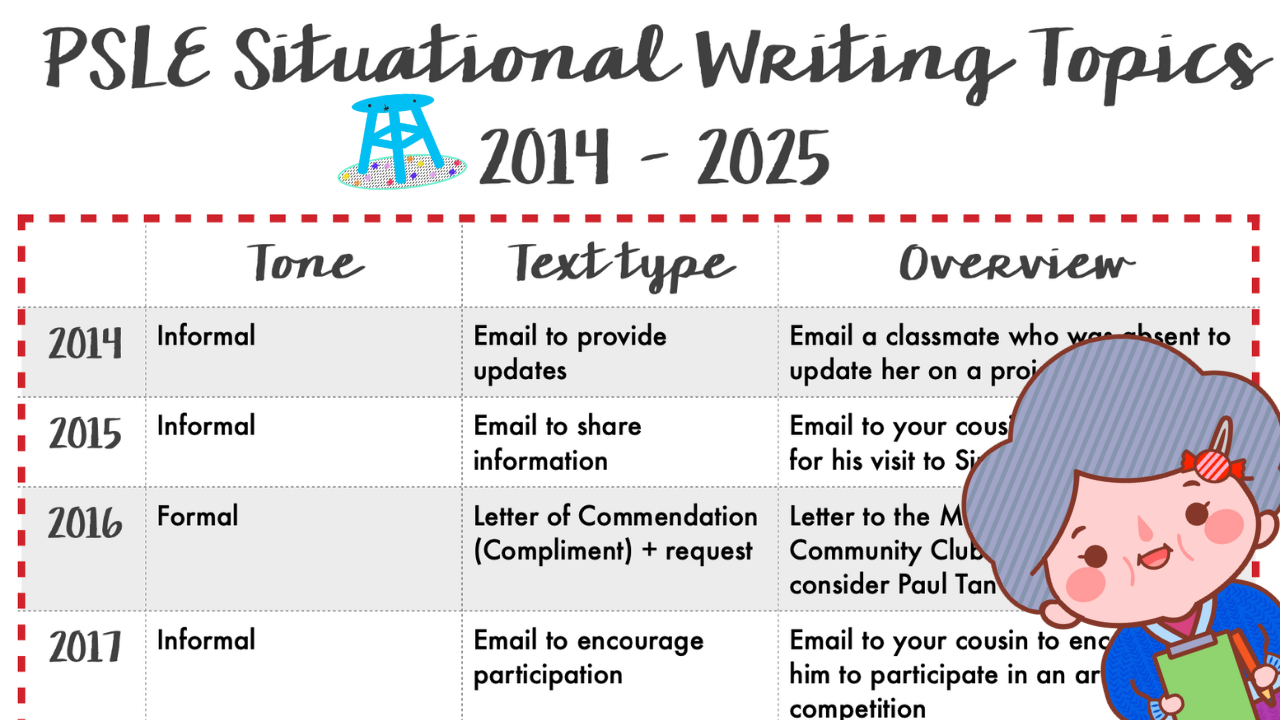
In primary school, situational writing focused mostly on emails and articles. In secondary school, you’ll still write emails —but you’ll also be expected to handle a wider range of formats, including:
• Reports
• Letters
• Speeches
• Proposals
This section remains pretty much the same, as you’ll be tested on how well you understand the purpose, audience, and tone of the task, organise your points clearly, use appropriate language and format.
4. Oral Exams Become More Interactive (And No More Reading Aloud!)
In primary school, oral exams had two components:
1. Reading Aloud (passage)
2. Stimulus-based conversation
Once you step into secondary school, that changes. There is no more reading aloud. Instead, the oral component focuses fully on spoken interaction. You’ll watch a short video (usually 1–2 minutes long), and then:
• Answer questions about the video’s content and message
• Share your personal views related to the theme
• Engage in a two-way conversation with the examiner
The topics are often drawn from real-world issues—like environmental conservation, kindness in the community, or responsible social media use. The key is to express your ideas clearly, confidently, and logically. In order to be well prepared for this, you should ensure that your knowledge of current affairs is good.
5. Say Hello to an Improved Version of Editing (again!)
A component that appears in both Primary and Secondary English is Editing. However, the secondary format is a little different. You’ll be given a short passage with ten lines, and eight of them contain grammatical or spelling errors. You’ll need to:
- Spot the errors and circle them
- Write the correct word for each oneThis section tests your ability to apply grammar rules, spelling, punctuation, and word forms in context. This is why we work so hard to improve your foundation in Grammar during your primary school years!
6. Visual Text Comprehension: Reading Beyond Words
The name of this section may be familiar to you. However, in secondary school, the questions for VTC are mostly open-ended. You’ll be asked to study a visual text such as:
-
- Advertisements
- Posters
- Infographics
- Web pages or social media posts
Thereafter, you’ll need to answer short questions that test your understanding of both the visual features (like layout, images, and font) and the language used (like slogans, persuasive techniques, and tone).
This section encourages you to think critically about how information is presented in real life—not just in books.
How You Can Prepare for Secondary School English
Here are some simple ways to get a head start:
- Keep reading—a variety of books and news articles will give you exposure to deeper themes and different writing styles, and keep you updated on current affairs
- Practice different types of writing—not just stories. Try reviews, reflections, or persuasive pieces.
- Build your vocabulary—know the meaning of unfamiliar words that you come across and use new words naturally in conversations
- Speak up and share your thoughts—have meaningful discussions with your family and peers to help build confidence for oral communication.
- Stay curious—ask “why” and “how” when you read or write.
Secondary school English may seem more demanding—but it’s also more exciting. You’ll learn to think deeply, write powerfully, and express yourself with confidence – skills that you will need as you step into the adult working world. Remember, every Secondary 1 student starts as a beginner. What matters most is your willingness to learn and grow.
From all of us at Lil But Mighty, we’re cheering you on as you make this big leap and are always here to help you through the transition. You can check out our secondary school classes here. You’ve got this!

WordStruck Secondary English Telegram Channel
Welcome to Lil' but Mighty’s WordStruck official channel! 🎉
This community is dedicated to empowering students to excel in O-level English.
By 2026, we hope to support 1,000 students.🌟
Love,
Lil' but Mighty